
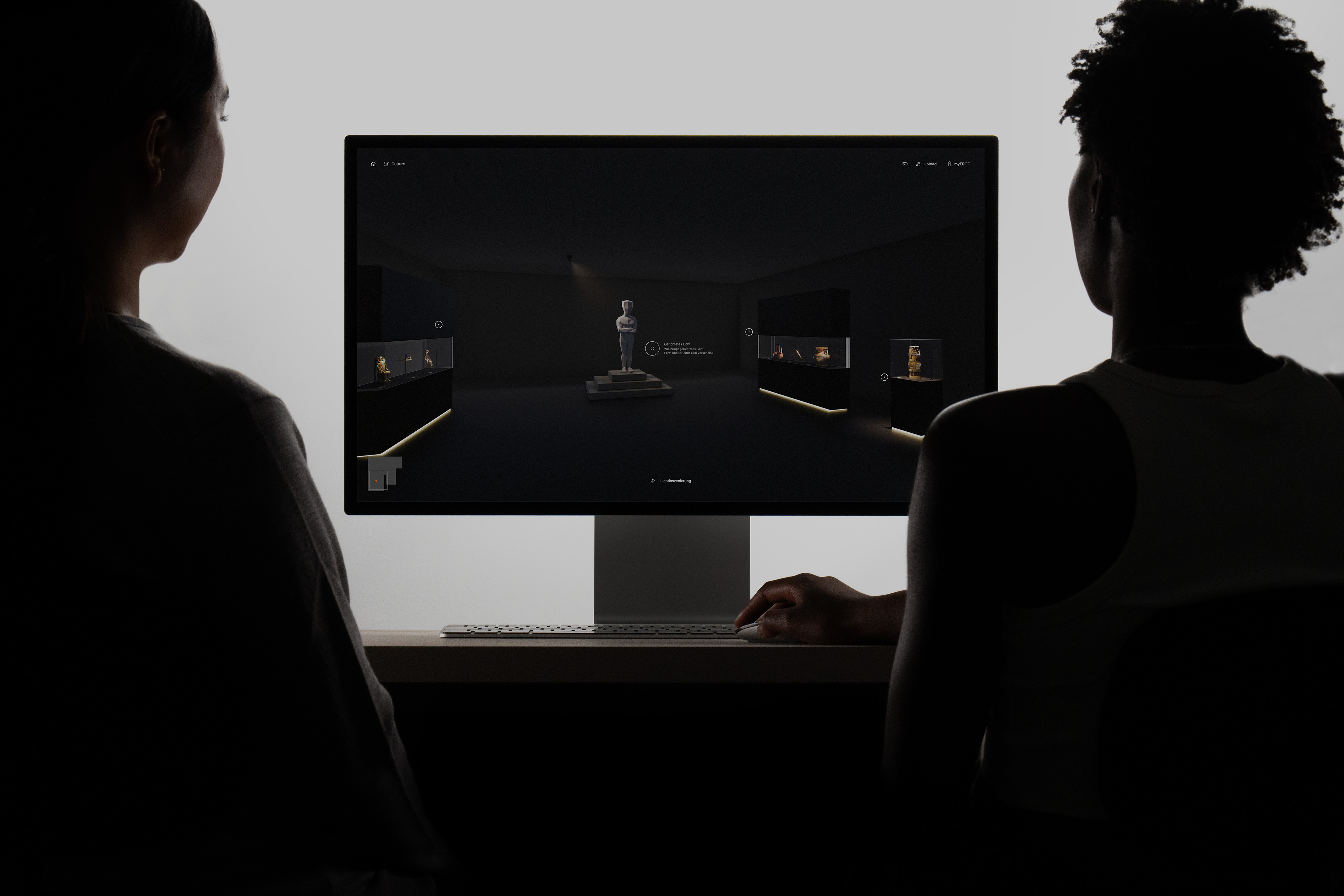
How can you design something that is neither tangible nor visible, yet fundamentally shapes spaces?
Light is a central design element in architecture, but often difficult to imagine. In collaboration with the lighting manufacturer ERCO, a digital spatial experience was created that not only explains the impact of light but also makes it visually and interactively perceptible.
Light is a central design element in architecture, but often difficult to imagine. In collaboration with the lighting manufacturer ERCO, a digital spatial experience was created that not only explains the impact of light but also makes it visually and interactively perceptible.
This project explores how lighting can be translated into an interactive learning experience. While light plays a crucial role in shaping atmosphere, orientation and perception in architecture, its effects are often difficult to communicate through traditional drawings or static images.
To address this challenge, we designed a digital environment that allows users to experience how different lighting scenarios influence spatial perception. By interacting with light, visitors can observe how contrast, direction and intensity shape the way objects and spaces appear.
To address this challenge, we designed a digital environment that allows users to experience how different lighting scenarios influence spatial perception. By interacting with light, visitors can observe how contrast, direction and intensity shape the way objects and spaces appear.
Background
Bringing the knowledge of the Handbook of Lighting Design into the digital age transformed into an intuitive, interactive, and immersive experience.

The handbook of lighting design
with its systematic graphics by Otl Aicher
with its systematic graphics by Otl Aicher
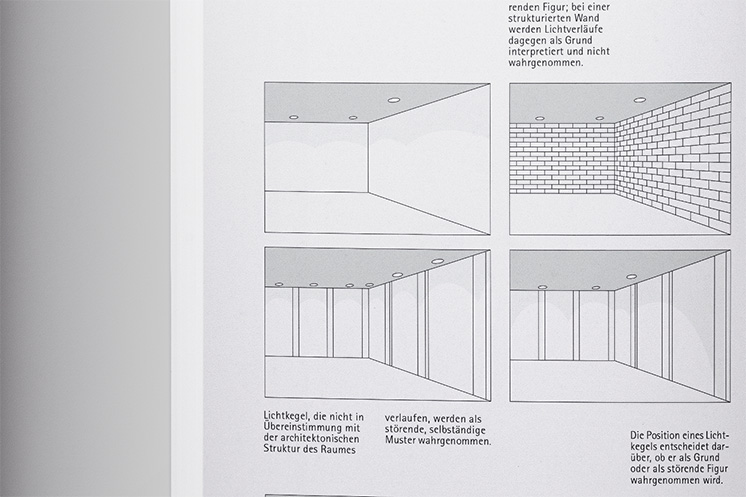
Technical drawings
in the chapter on perception
in the chapter on perception

Technical drawings
in the chapter on planning practice
in the chapter on planning practice
Challenge
The handbook of lighting design, developed with the legendary designer Otl Aicher, has long been a cornerstone of architectural lighting design. Through precise graphics, it illustrates the many possibilities of shaping spaces with light. Yet these representations remain static: they show principles, but not the dynamic, experiential quality of light in space.
Our challenge was to translate this foundational knowledge into a contemporary, digital format that allows for intuitive exploration in 3D.
Our challenge was to translate this foundational knowledge into a contemporary, digital format that allows for intuitive exploration in 3D.
Concept
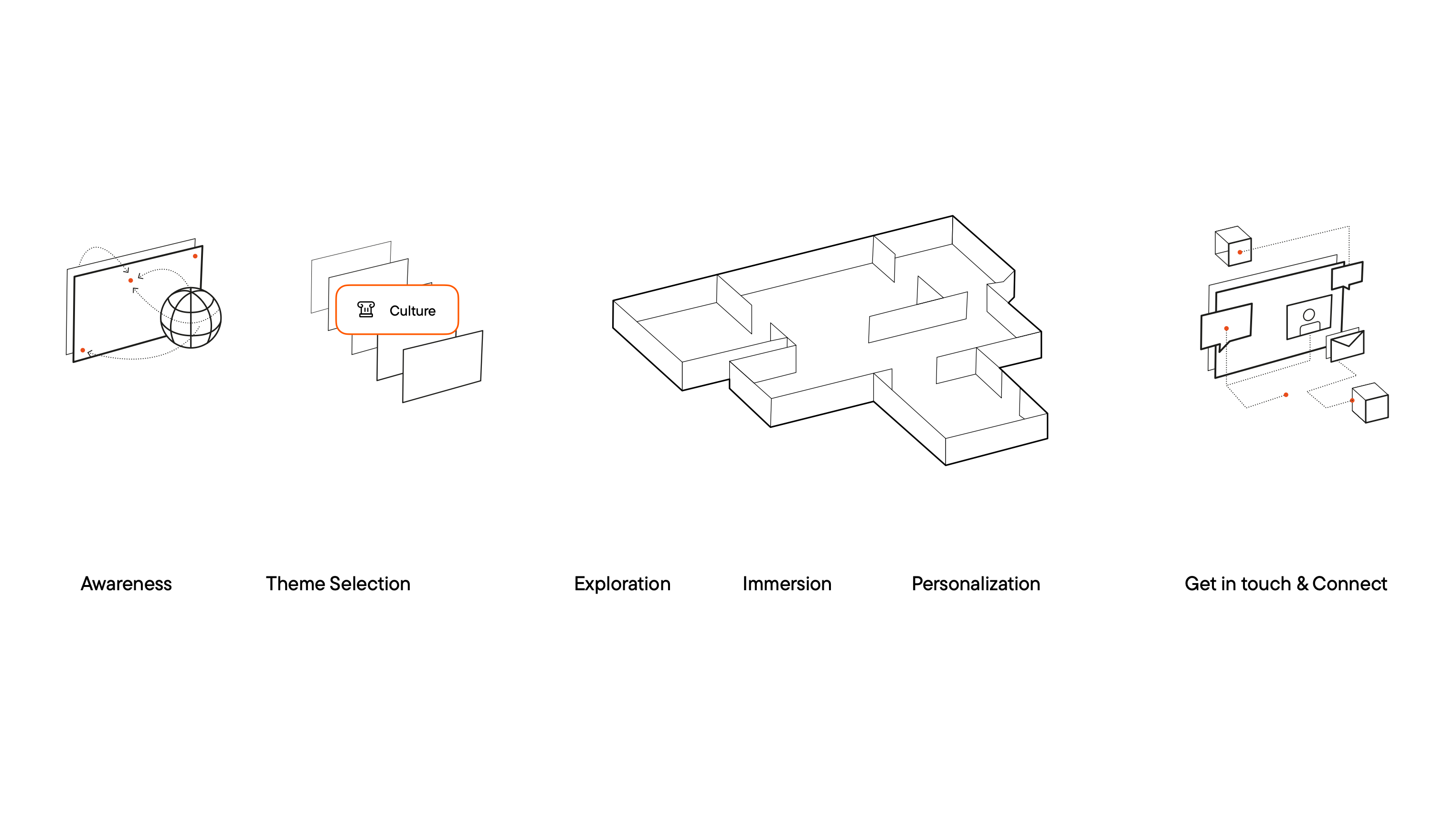
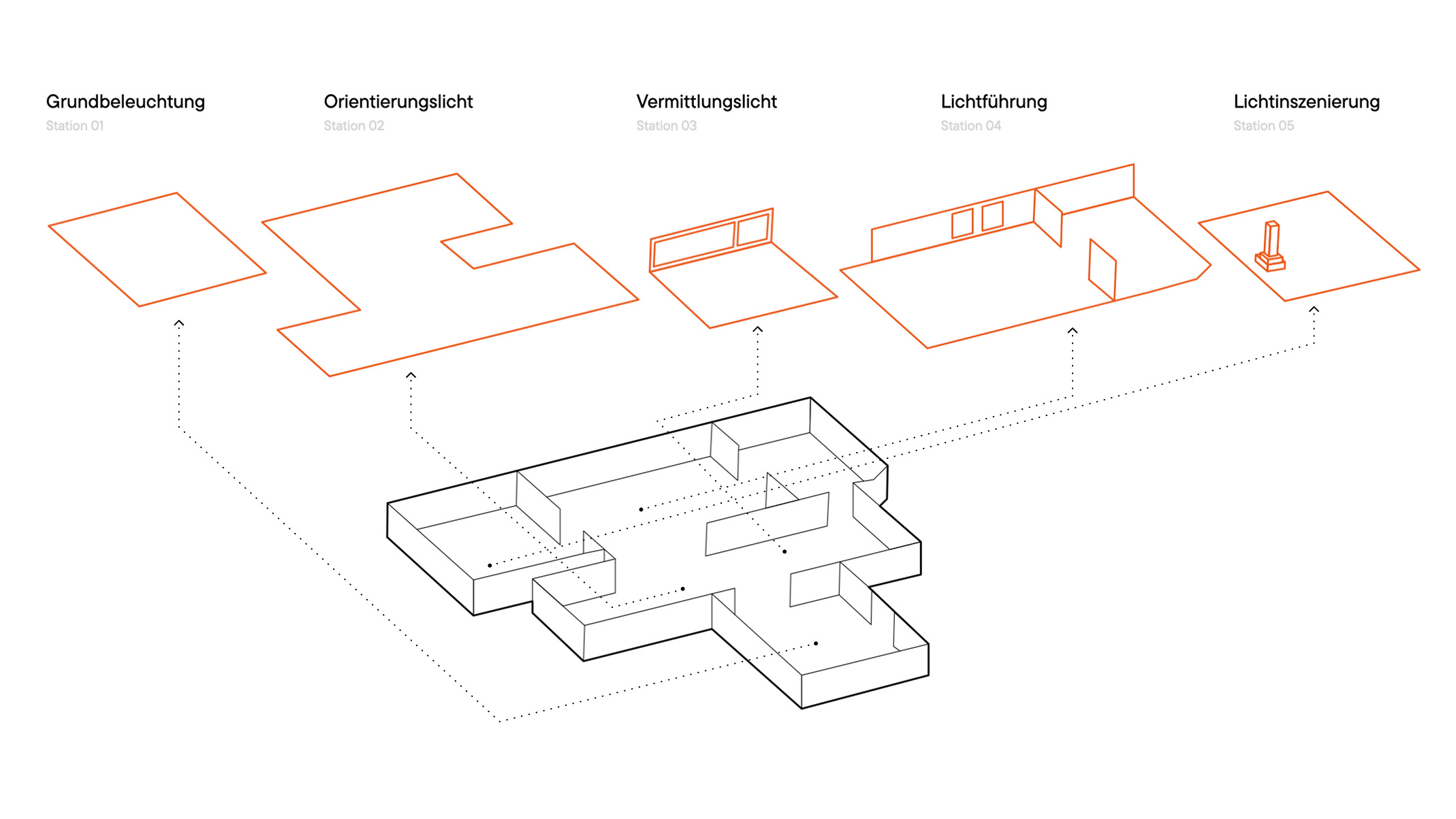
From discovering the concept to immersive exploration and personal connection
Costumer Journey
Enter the experience space via one of the access points on the website and introduction to interaction within the experience space
Introduction to the first station of the experience room — basic lighting
Interaction with one of the interaction panels
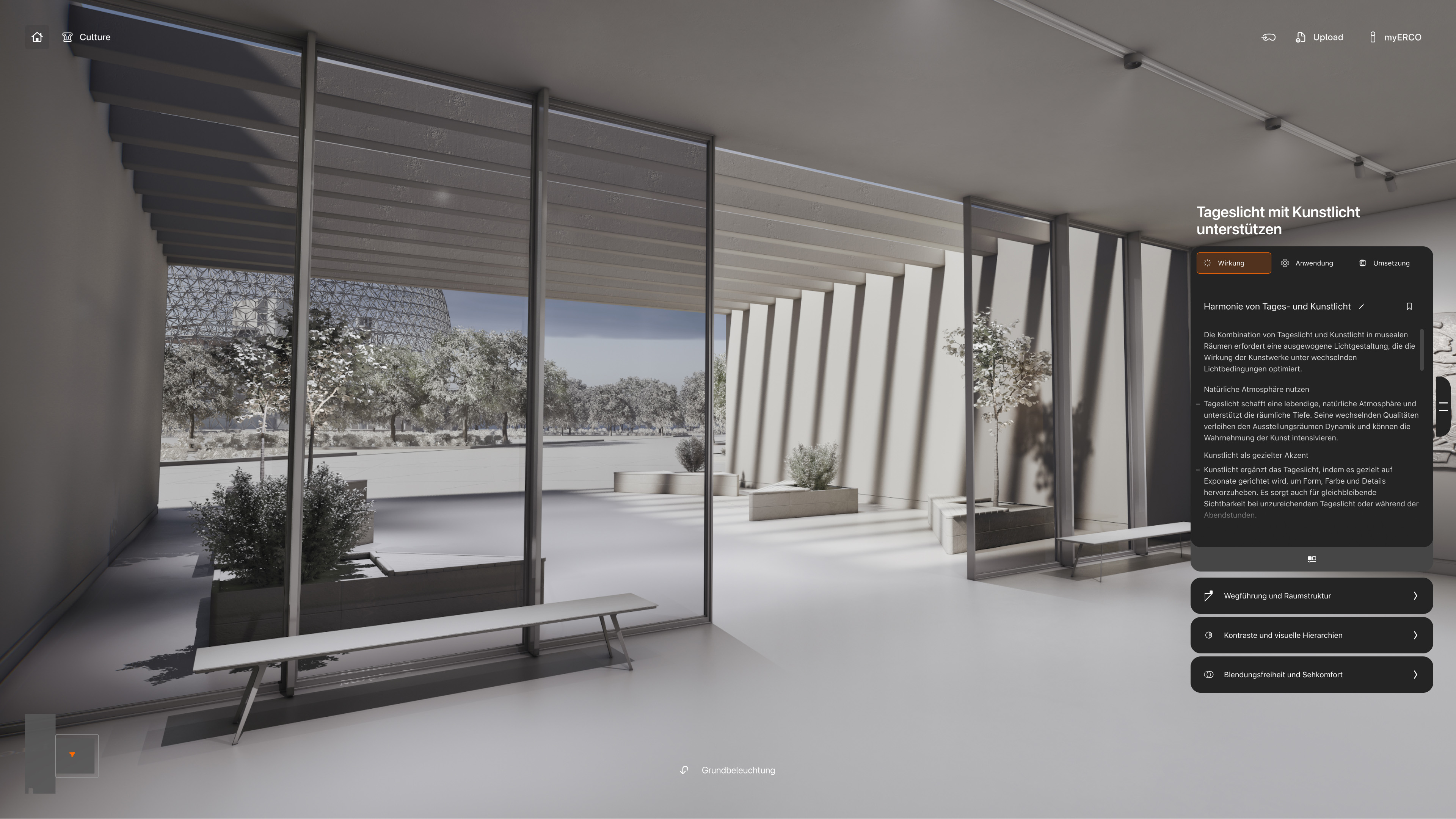
AI assistance as a didactic layer: guiding users through lighting principles based on the handbook of lighting design
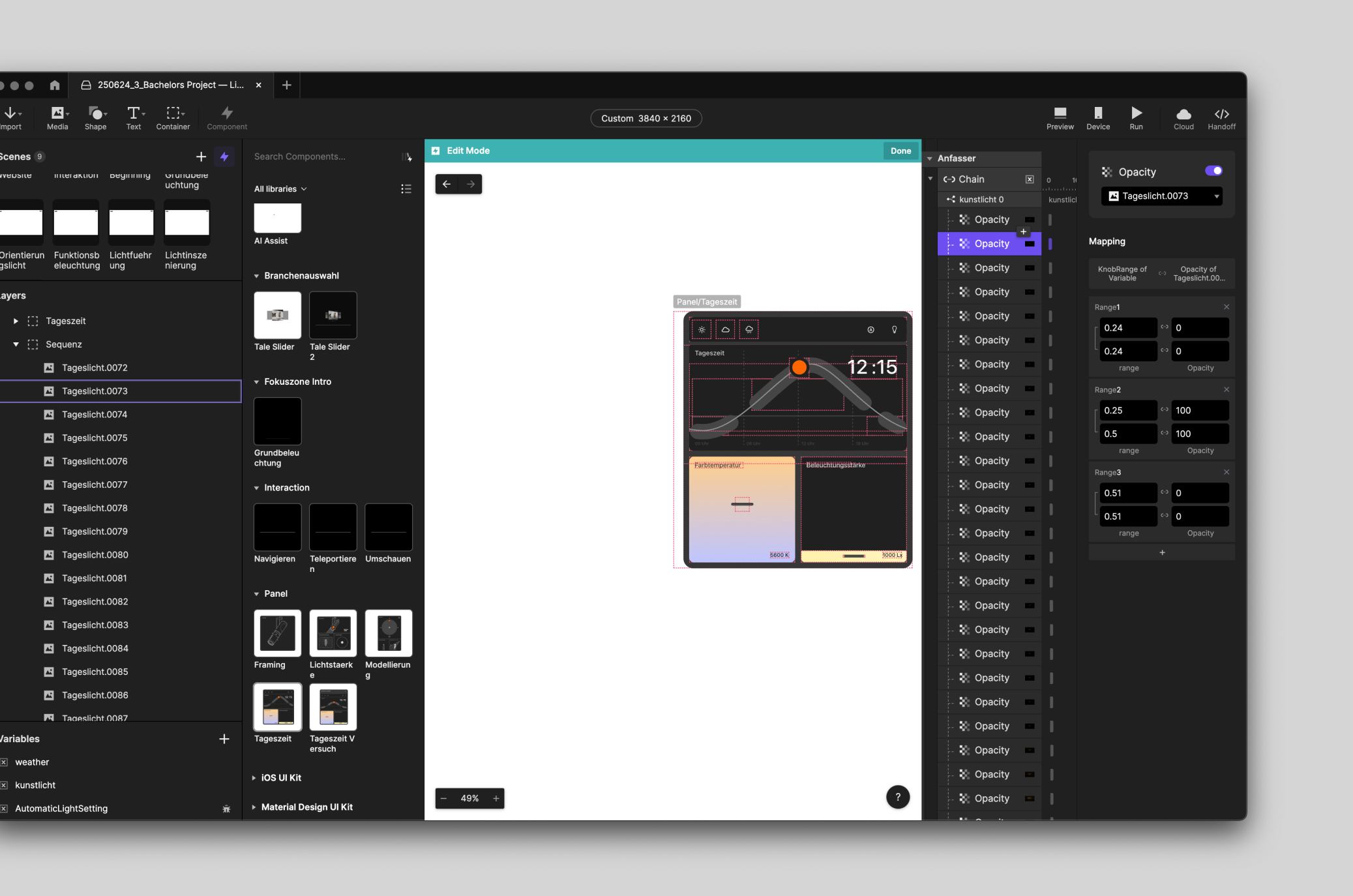
Implementation in ProtoPie
Chain-Triggers to simulate the interaction with the knob
Implementation in ProtoPie
Chain-Triggers to simulate the interaction with the knob
How can AI-driven lighting guidance turn knowledge into conversation?
AI Assist
By combining ERCO’s design knowledge with AI, the assistant transforms static information into an interactive companion.Through a Node.js backend and the OpenAI API, it reacts dynamically to user input within the interface. Each interaction is registered and analyzed by the AI to generate context-specific, informative content in the background. This content can be accessed within the immaterial, didactic layer, where each lighting topic is explained textually from three perspectives: effect, application, and implementation.
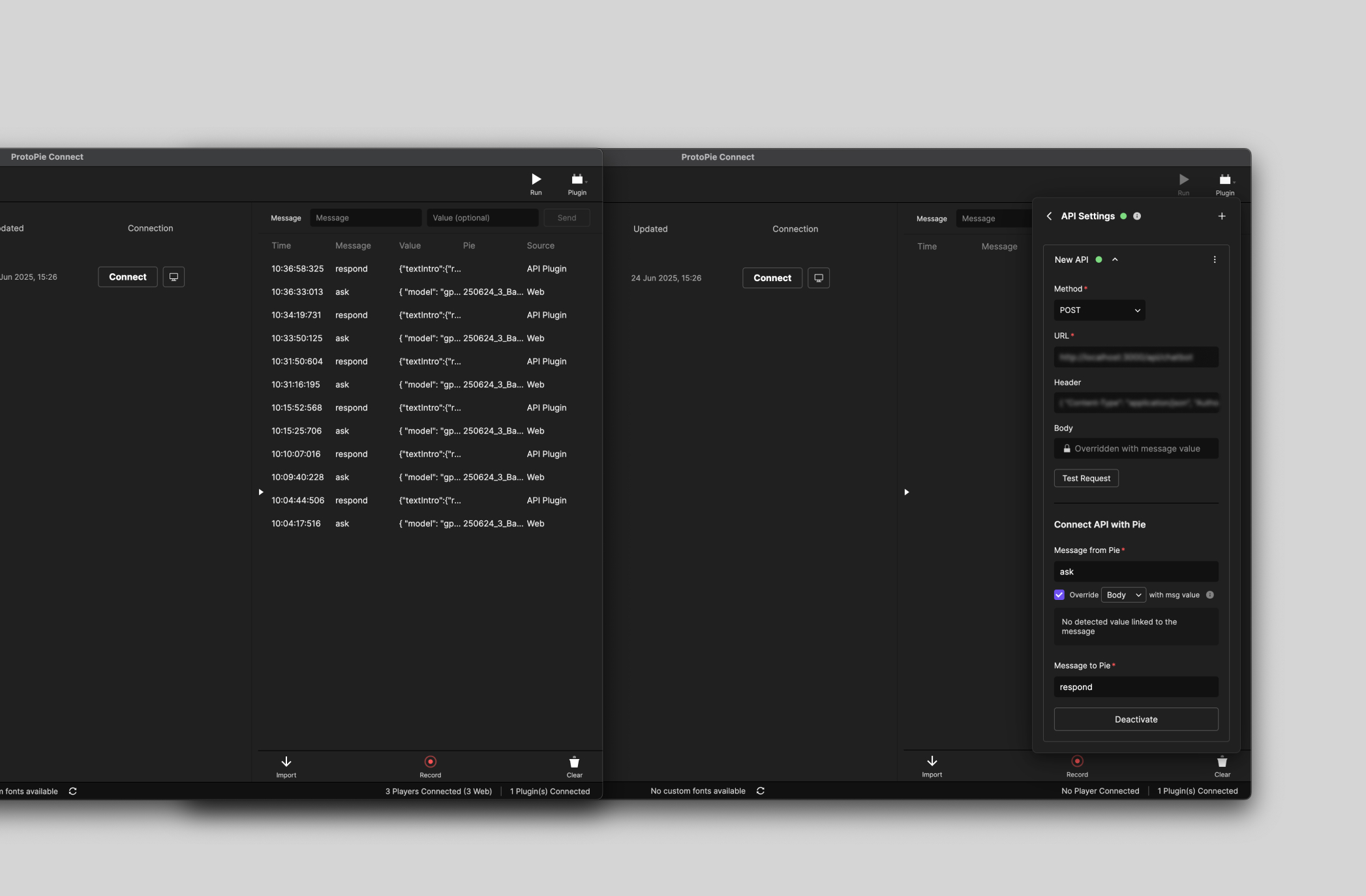
ProtoPie Connect
Processing of logic, API key management, and transfer of the request to OpenAI API
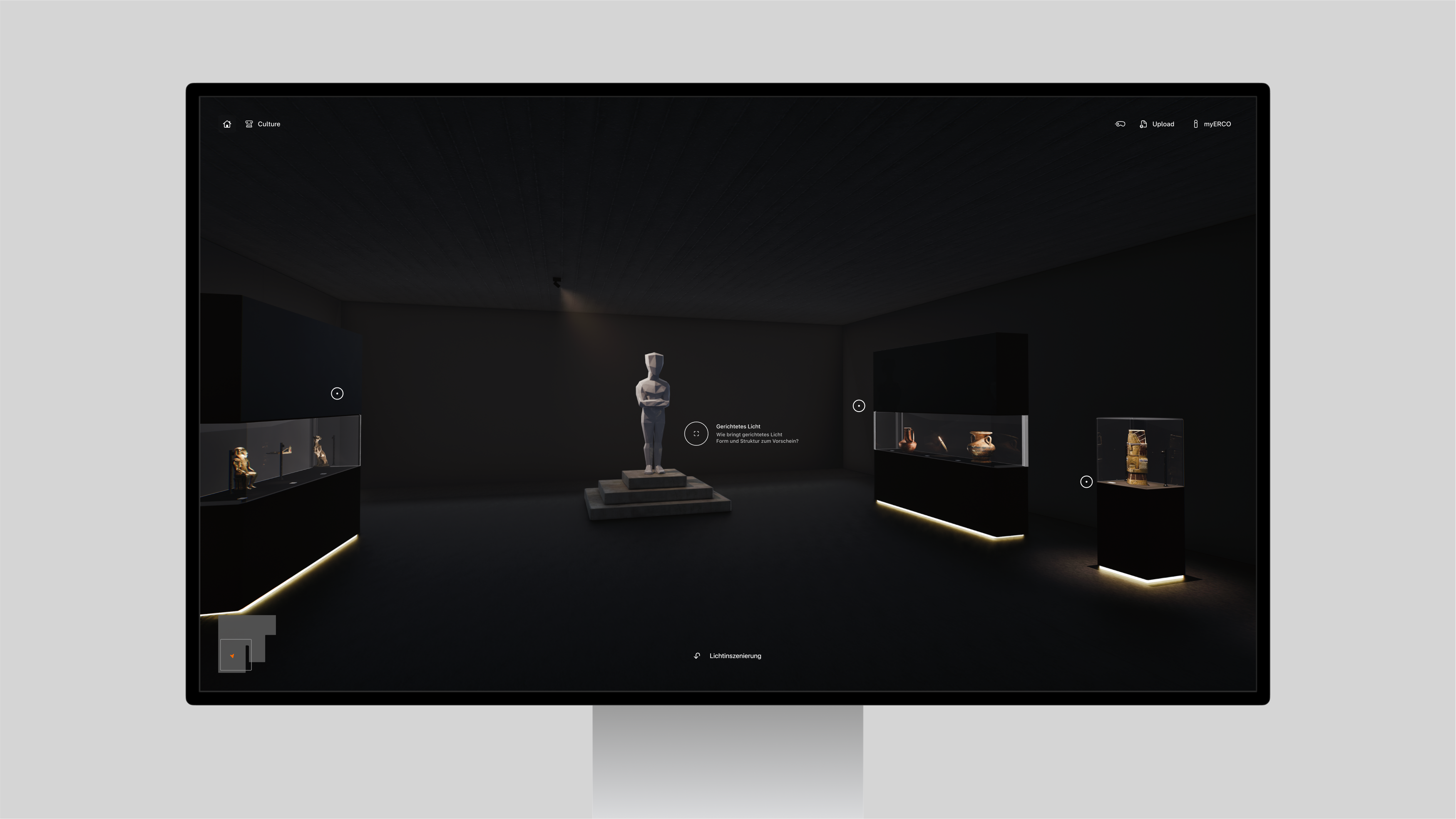
At the lighting staging station, different lighting scenarios demonstrate how light and shadow shape the perception of a sculpture.
The experience room
How can an experiential space make light tangible?
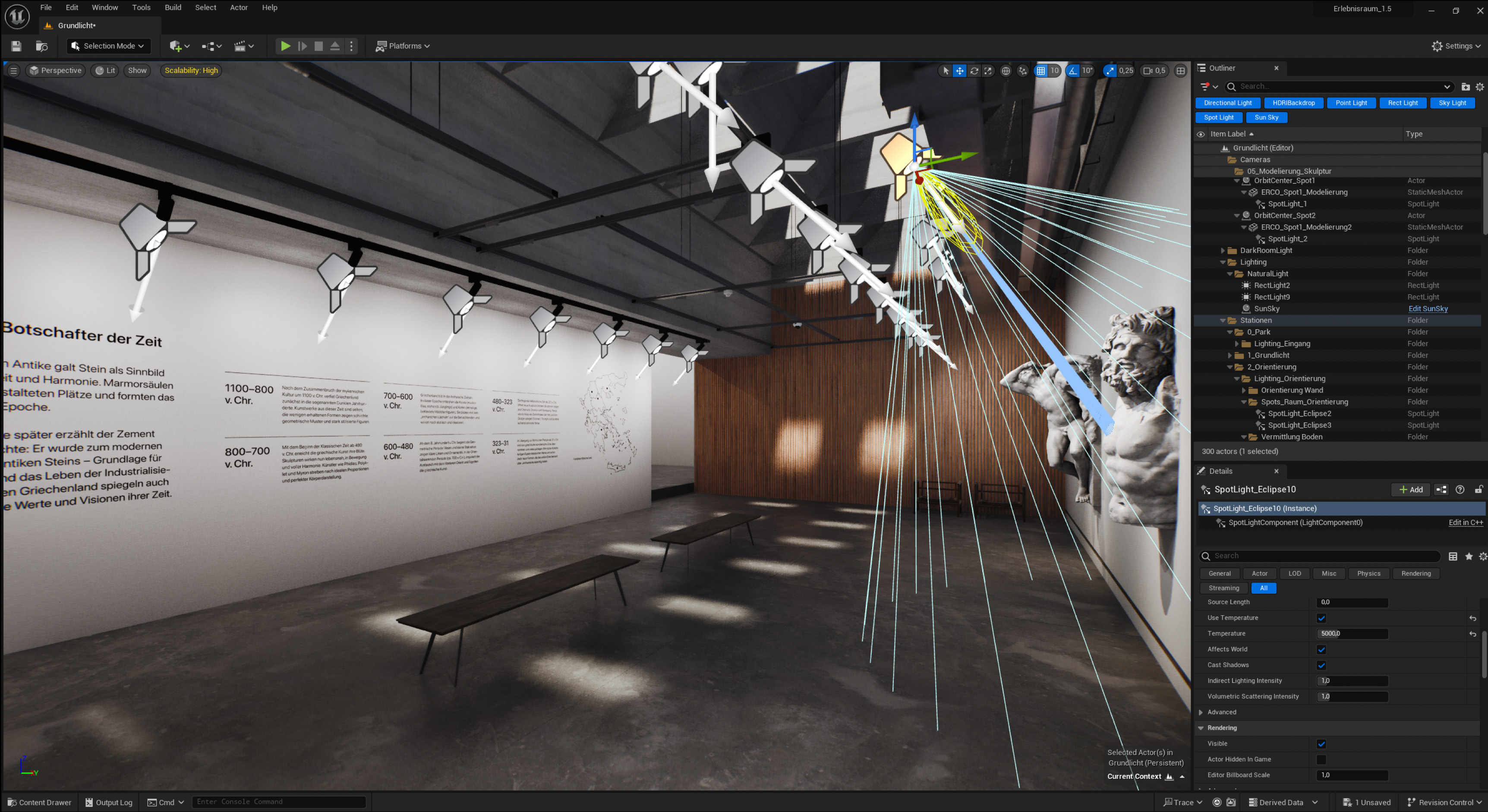
Implementation Unreal Engine 5
Experience Room
To bring the experiential space to life, we developed a virtual environment using Unreal Engine 5. Its advanced lighting and material rendering allowed us to simulate realistic lighting scenarios and create an immersive spatial experience.
From knowledge to immersion
How can we move
from understanding light to experiencing it?
from understanding light to experiencing it?
Next dimension
The implementation of the experiential space in virtual reality expands the concept into an immersive, forward-looking dimension. Users can perceive the impact of light in direct spatial relation to material, perspective, and structure, both sensually and emotionally.
A key step into the next dimension is the integration of MetaHumans: digital ERCO experts who guide users through the virtual experience, creating a direct and personal connection to professional lighting design.
A key step into the next dimension is the integration of MetaHumans: digital ERCO experts who guide users through the virtual experience, creating a direct and personal connection to professional lighting design.
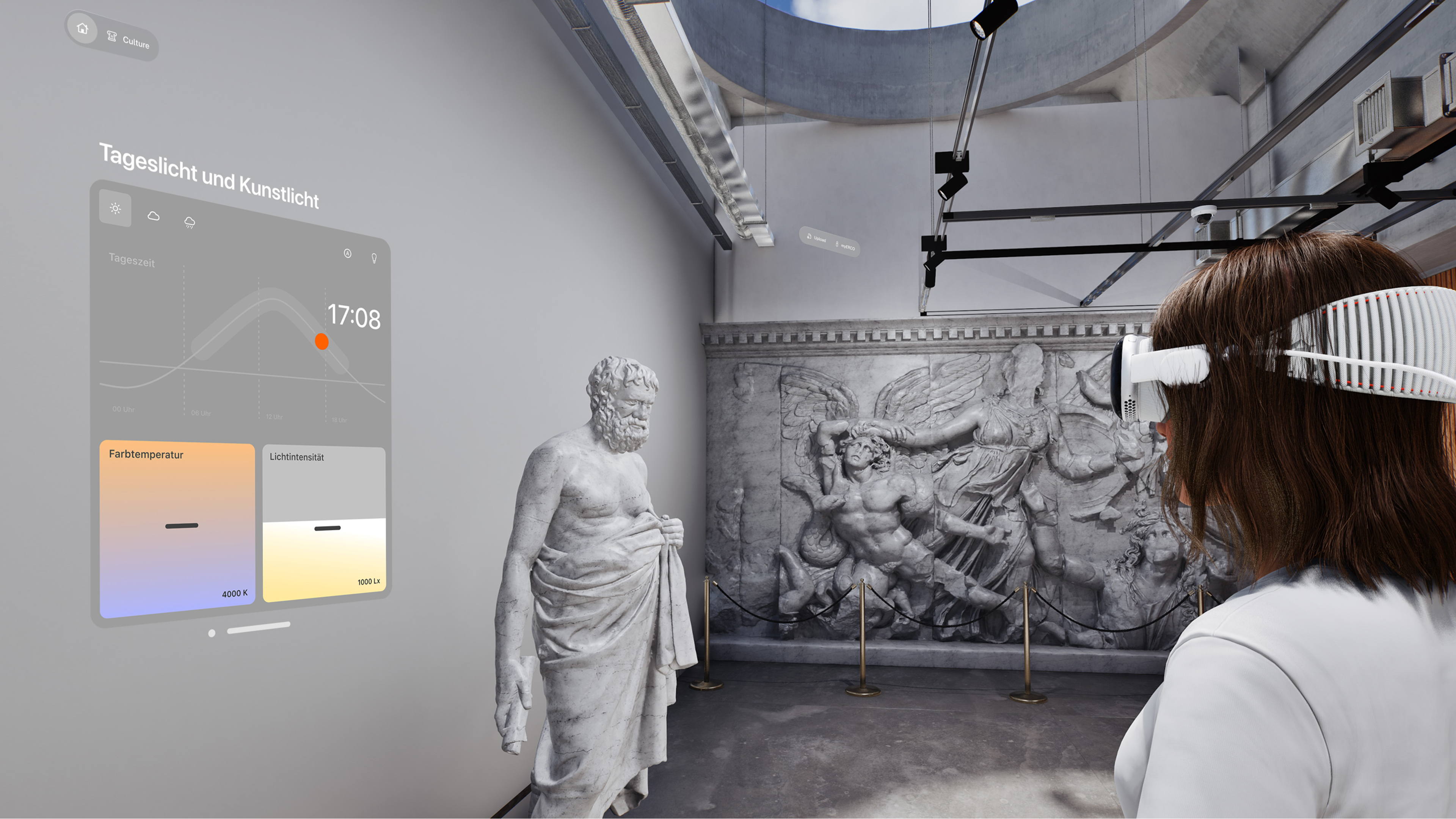
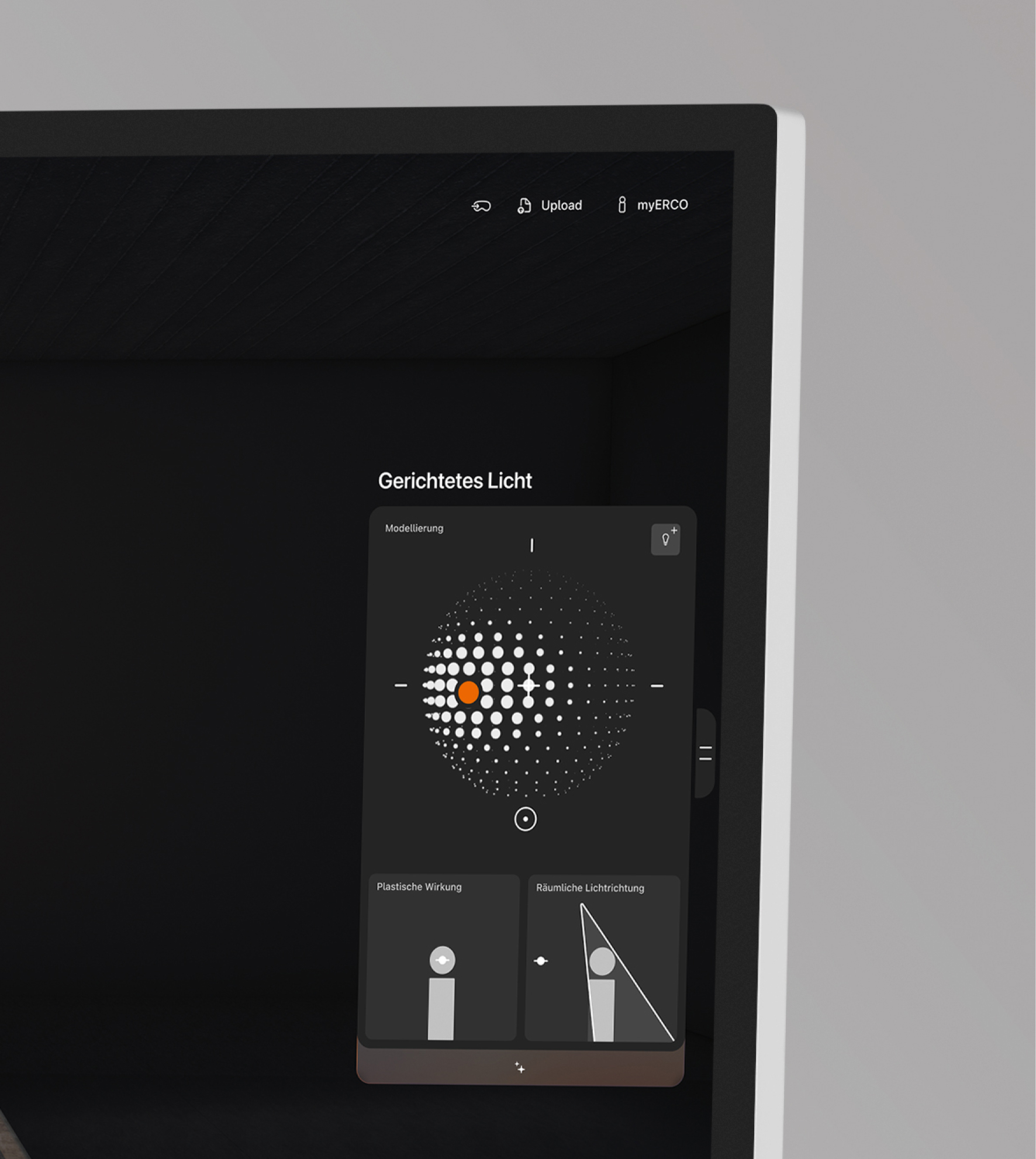
Immersive control of light and atmosphere in VR
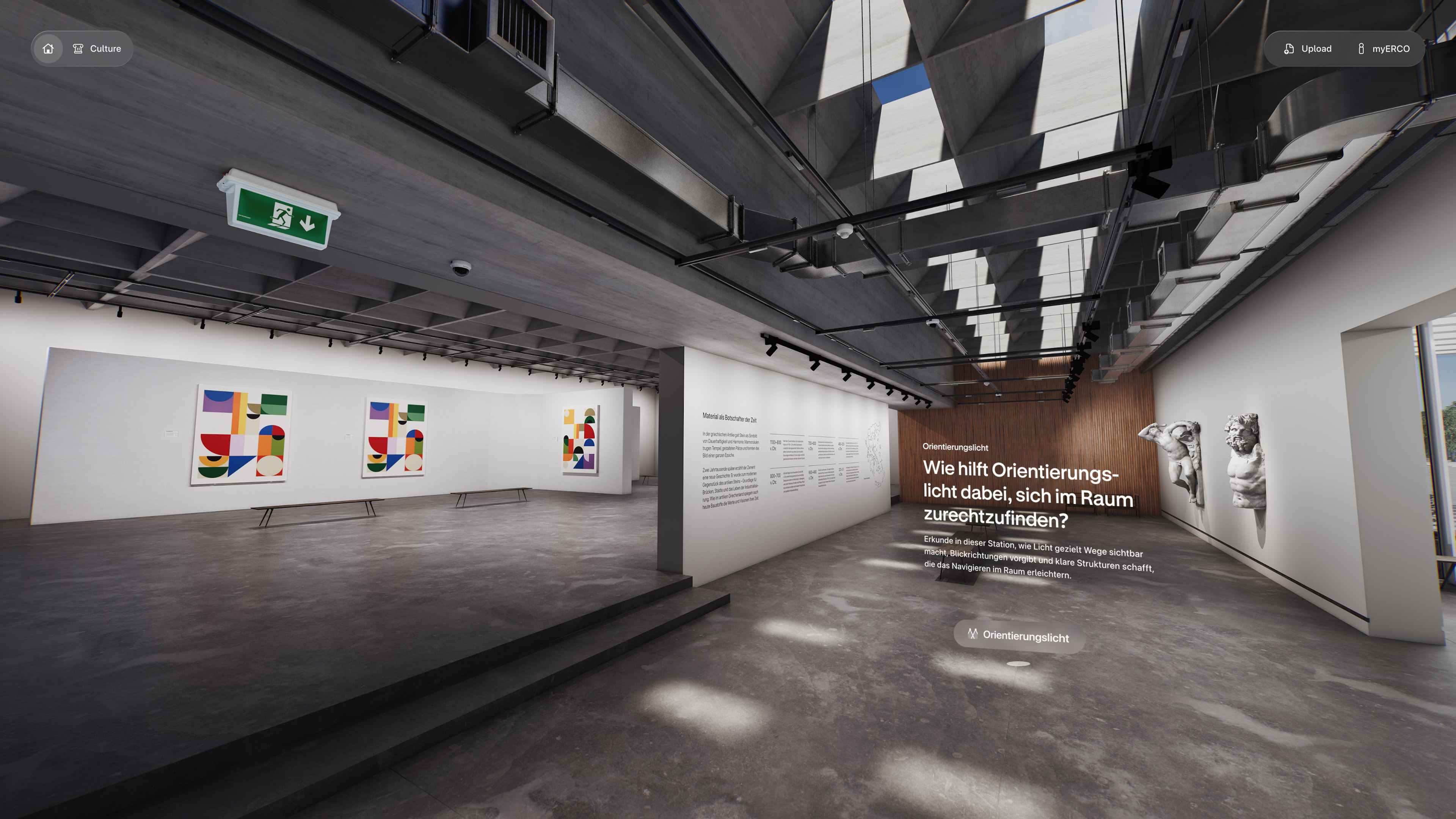
Orientation lighting visualized in an immersive control panel
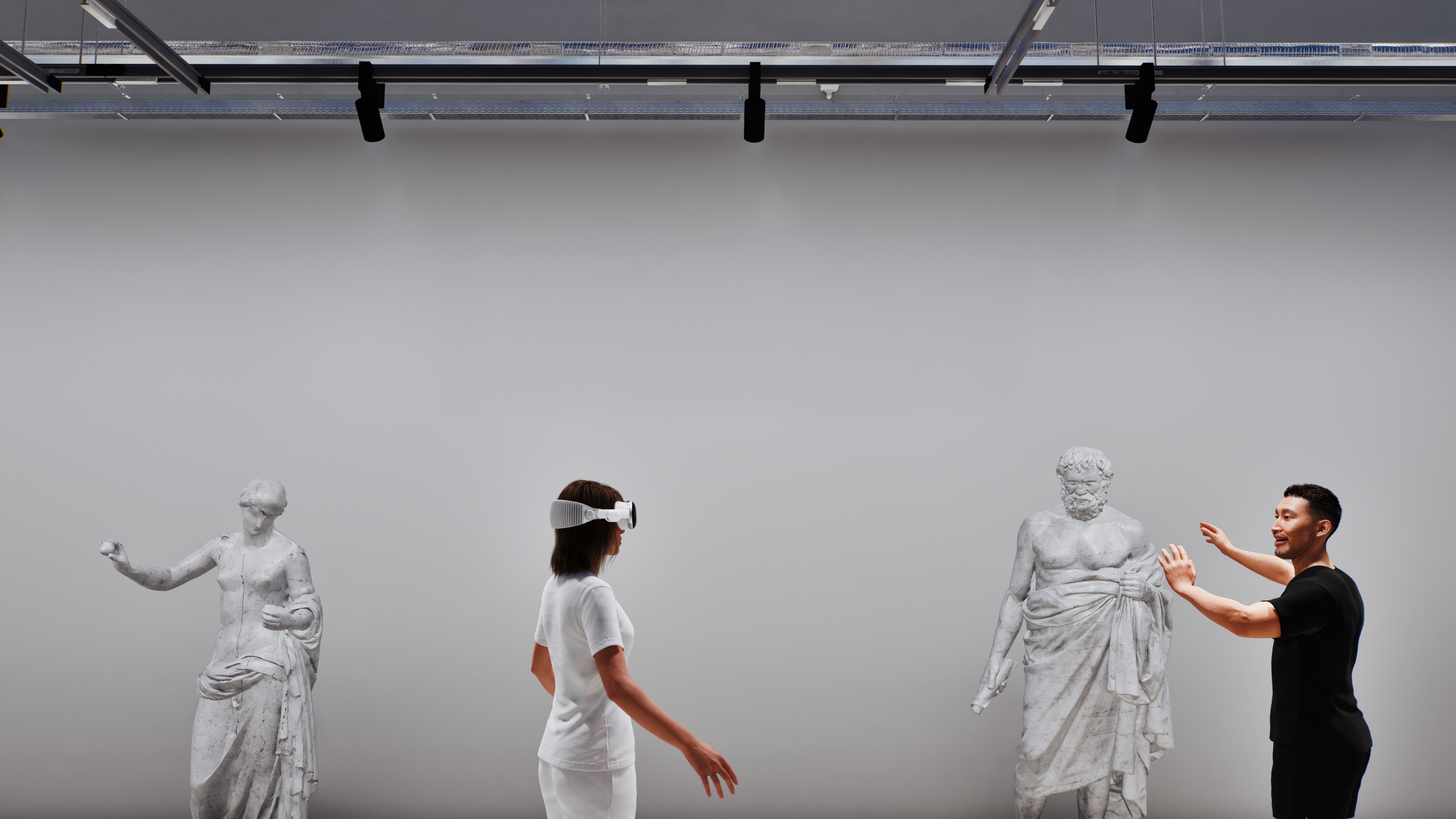
Personalized guidance in VR
MetaHuman as a virtual lighting consultant
Software
UI Design & Low-fidelity Prototype
Interactive Prototype
AI Assist
Backend AI Assist
Background Animation Post-processing
Background Scenes
Credits
UI/UX Design & Prototyping
3D & Concept
Print & Concept
Information
Communication & Interaction Design
Communication & Interaction Design
Hochschule für Gestaltung