
Intro
In today’s digital world, users lack insight into the mechanisms that shape their online experiences. Algorithms determine what we see, search for, and perceive, often without our knowledge or control.
Traditional browsers offer no transparency regarding the digital twin that mirrors our behavior. As a result, users lose not only control over their information environment but also a degree of self-determination and privacy.
Traditional browsers offer no transparency regarding the digital twin that mirrors our behavior. As a result, users lose not only control over their information environment but also a degree of self-determination and privacy.
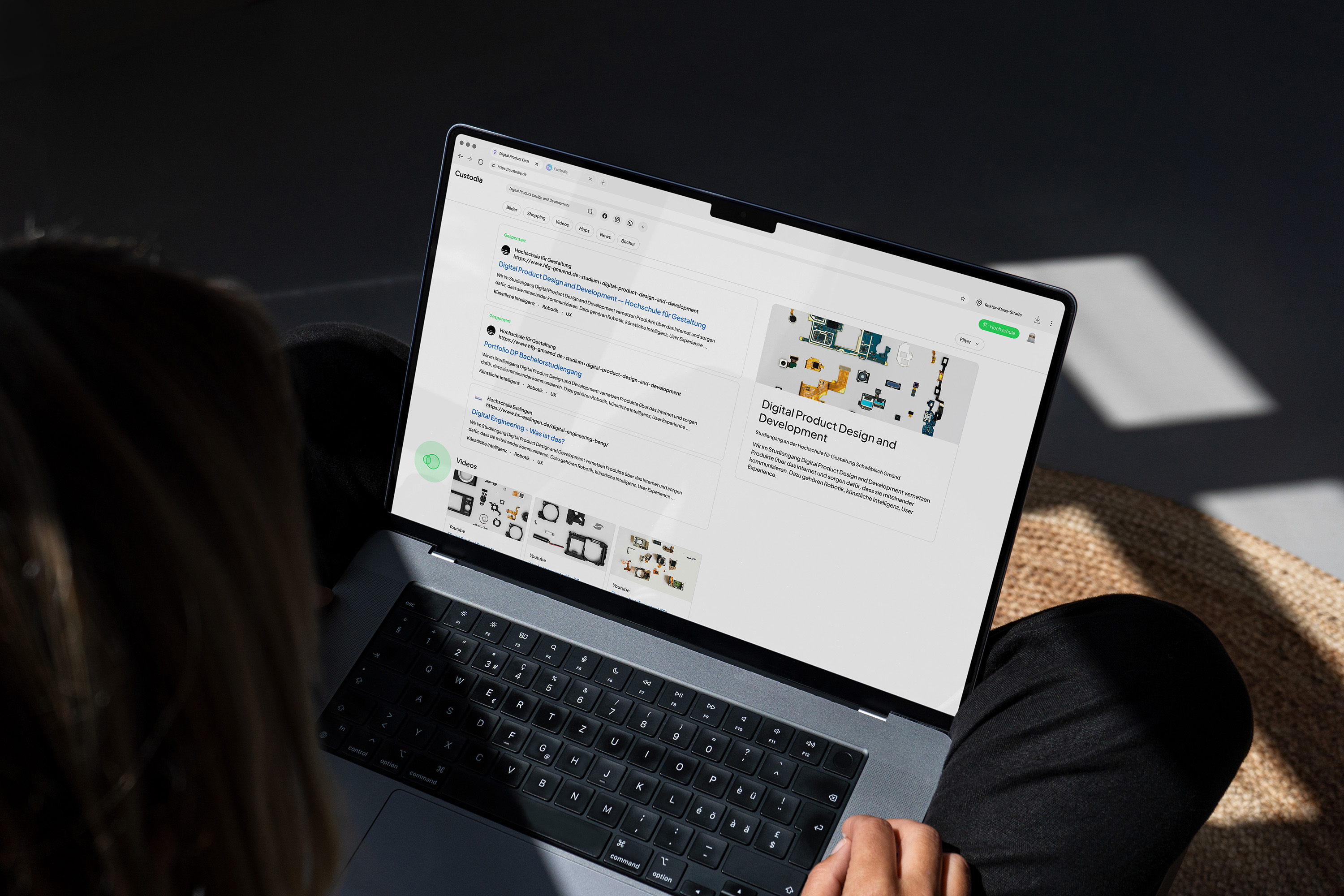
Custodia explores how users could regain awareness and control over their digital footprint. Instead of treating algorithms as invisible systems, the concept makes the digital twin visible and understandable.
Through a transparent interface, users can explore how their behavior shapes recommendations, search results and personalized content. By revealing these hidden mechanisms, Custodia encourages reflection and enables more conscious interaction with digital platforms.
Through a transparent interface, users can explore how their behavior shapes recommendations, search results and personalized content. By revealing these hidden mechanisms, Custodia encourages reflection and enables more conscious interaction with digital platforms.
Introducing Custodia — a browser that makes the invisible visible
Concept
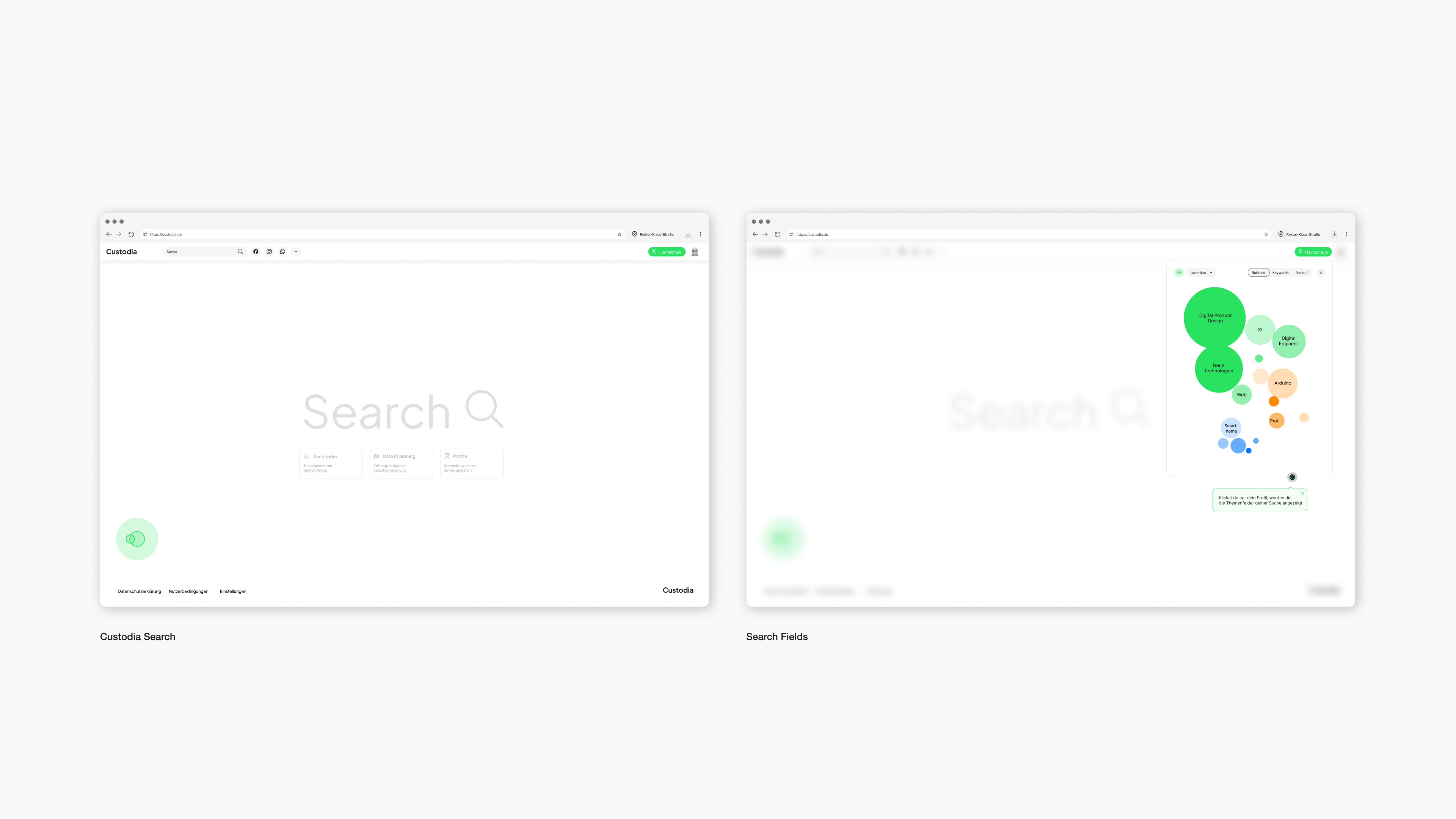
Custodia transforms the act of searching into an exploration of personal knowledge fields
Question Zero
What if the browser became a space of transparency rather than control?
Search Fields
Custodia addresses this issue: the browser makes the invisible visible and equips users with tools to actively shape their digital twin. It decodes algorithmic processes, fosters conscious search behavior, and creates a transparent, trustworthy online environment.
In Custodia, search fields visualize individual search patterns and thematic areas of interest. Users can edit, expand, or remove them to actively shape their digital twin making their online behavior visible, analyzable, and consciously designable.
In Custodia, search fields visualize individual search patterns and thematic areas of interest. Users can edit, expand, or remove them to actively shape their digital twin making their online behavior visible, analyzable, and consciously designable.
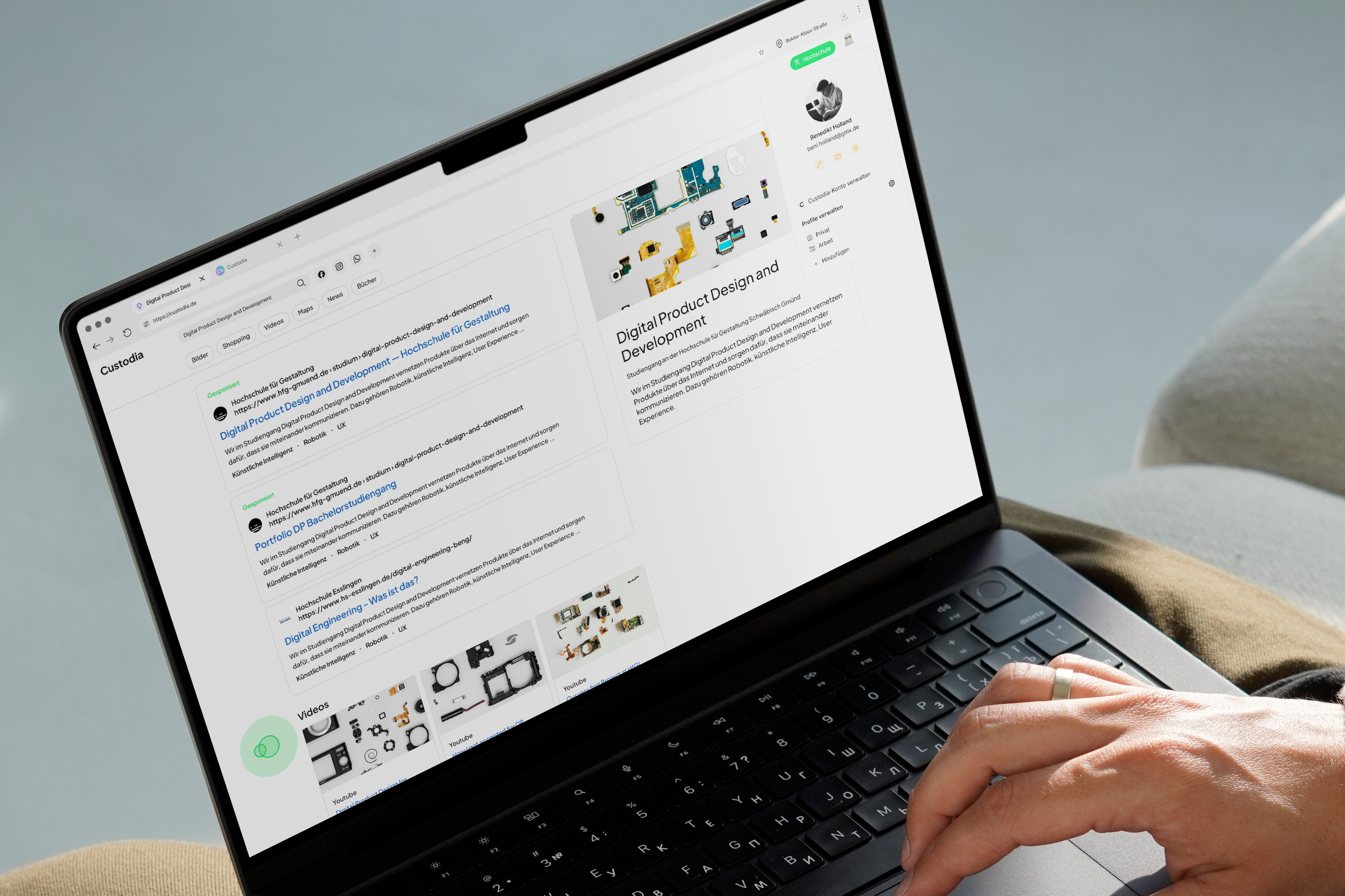
Context-based browsing for different areas of life
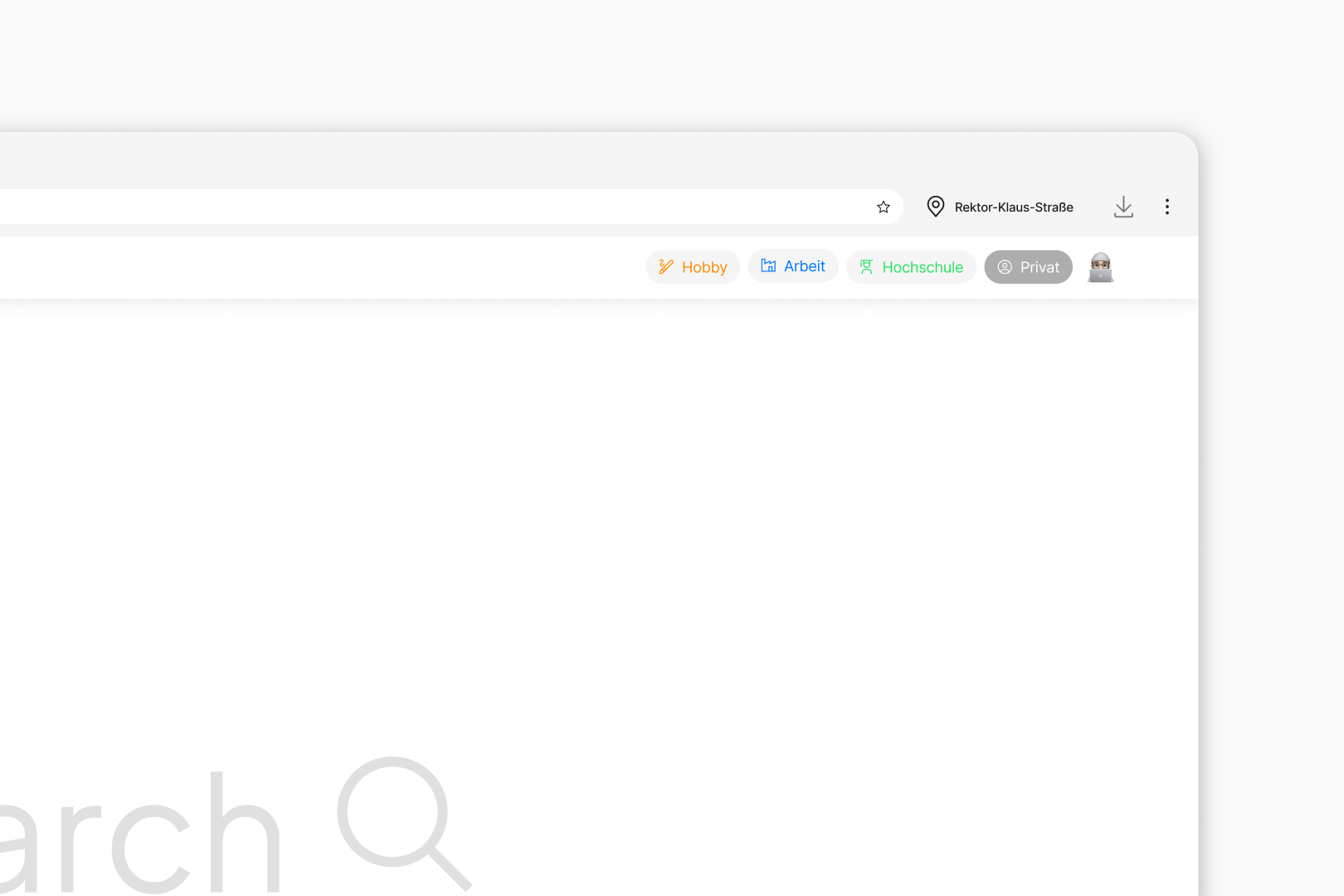
Personalized modes
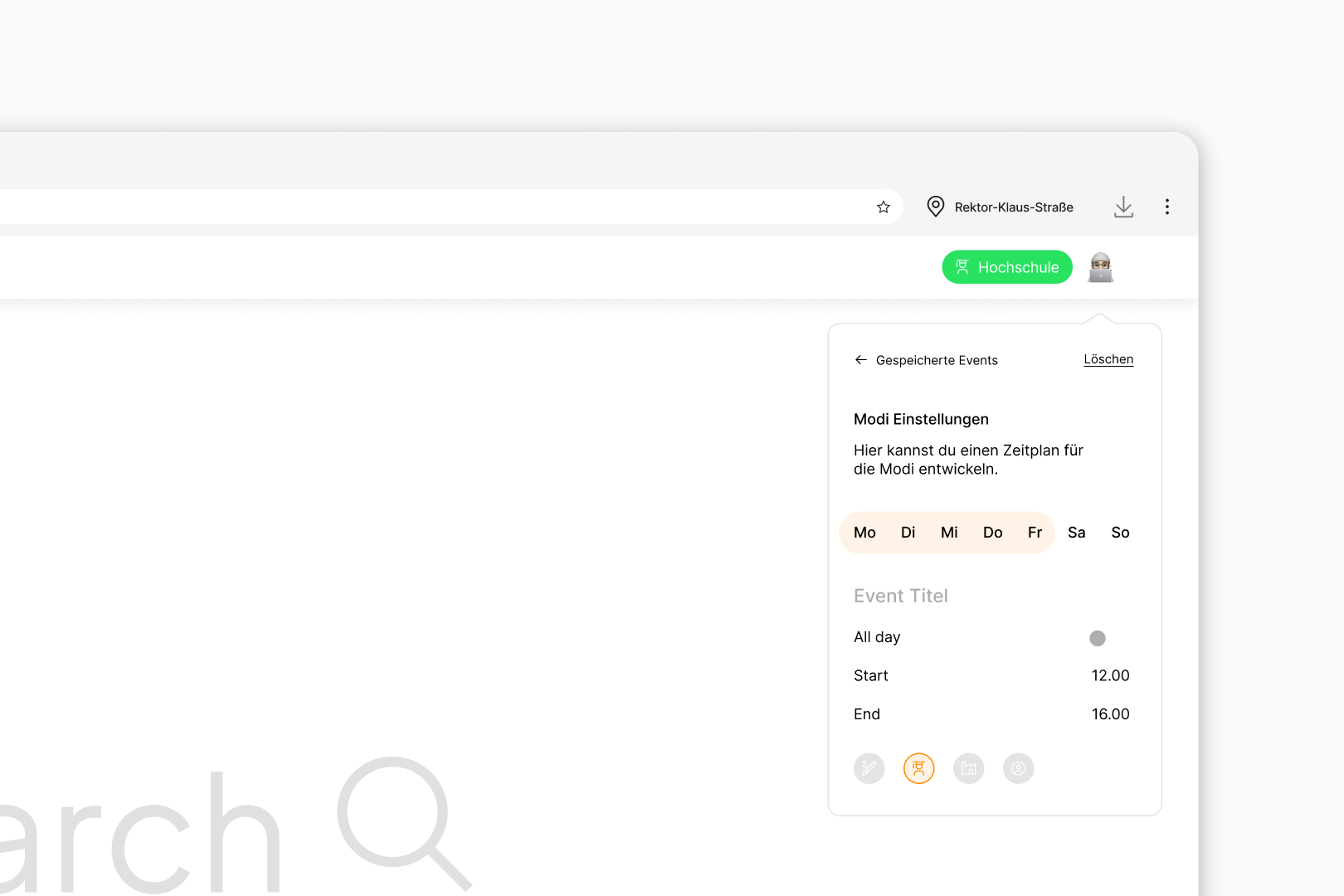
Activating digital modes through time-based settings
User Profils
Through personalized modes, Custodia introduces context-based browsing. Users create digital spaces for different aspects of life (study, work, or leisure) each preserving individual settings and search histories.
Modes can be activated contextually by time or place, allowing users to retain control over their digital behavior and avoid the creation of a singular online identity.
Modes can be activated contextually by time or place, allowing users to retain control over their digital behavior and avoid the creation of a singular online identity.

Manipulating the digital twin to reclaim algorithmic control
Data Poisoning
This groundbreaking feature gives users unprecedented freedom while browsing. By deliberately feeding manipulative data into their digital twin, users can bypass algorithmic influence.
The mode not only protects against unwanted data collection but also opens up new perspectives on digital autonomy. The visualized data may appear chaotic at first, yet it can be consciously structured through individual filters within the dashboard.
The mode not only protects against unwanted data collection but also opens up new perspectives on digital autonomy. The visualized data may appear chaotic at first, yet it can be consciously structured through individual filters within the dashboard.
Physical Extension of Digital Control
How can product design bring privacy back into the physical world?
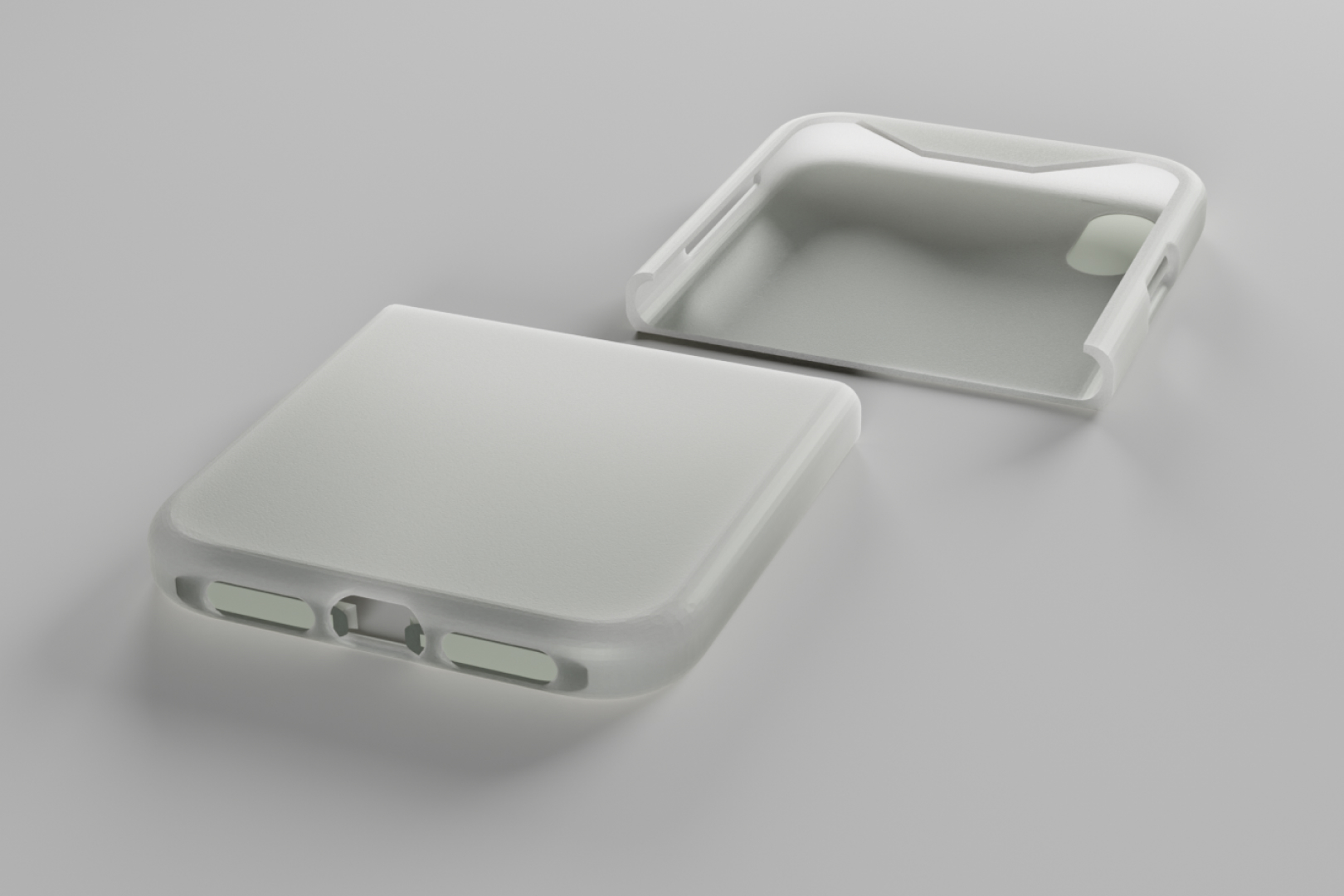
Physical protection for analog privacy
Cus Case
The CusCase serves as the physical counterpart to Custodia’s digital approach. Instead of feeding in more data, the case focuses on deliberate shielding: it covers microphones and cameras, giving users back control over their analog privacy.
By simply opening the case, hidden components can be reactivated when needed, access to the smartphone remains possible at all times, yet consciously controlled. The CusCase embodies a new sense of everyday security, making digital self-determination tangible in the physical world.
By simply opening the case, hidden components can be reactivated when needed, access to the smartphone remains possible at all times, yet consciously controlled. The CusCase embodies a new sense of everyday security, making digital self-determination tangible in the physical world.
Final result
Next dimension
What if our digital perspectives could be shared?
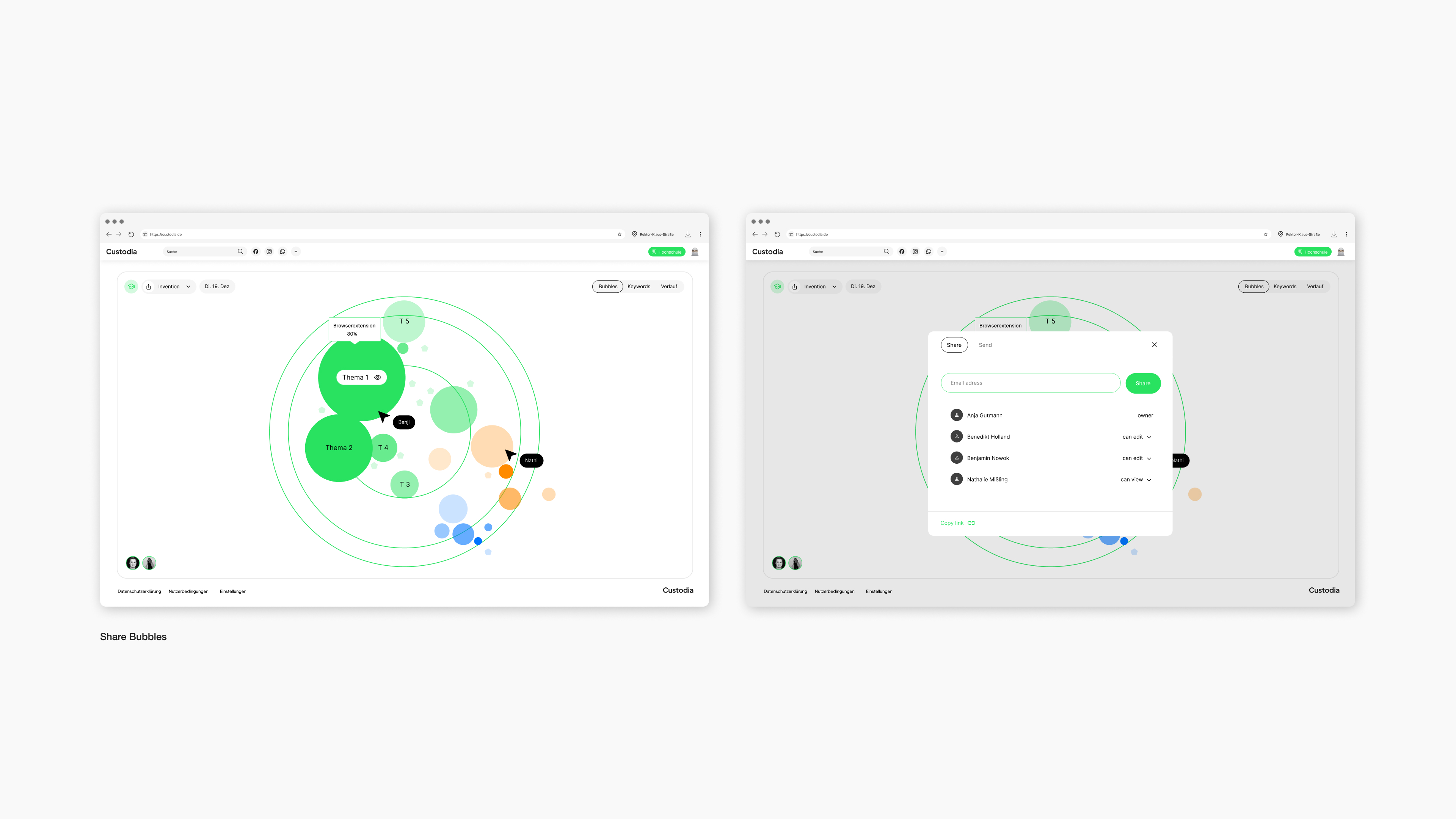
Collective visibility and comparability
Shared bubbles
The Shared Bubbles open Custodia’s previously individual sphere of insight to other users. By sharing thematic fields, a collective network of interests, search movements, and digital twins emerges.
Users can collaboratively explore topics, compare search paths, and observe how perspectives differ within a group or even contrast distinct algorithmic filter bubbles. In this way, Custodia becomes a tool for shared reflection on digital perception.
Users can collaboratively explore topics, compare search paths, and observe how perspectives differ within a group or even contrast distinct algorithmic filter bubbles. In this way, Custodia becomes a tool for shared reflection on digital perception.
Bubble History
The Bubble History visualizes how a user’s search behavior evolves over time. It reveals which topics gain or lose relevance and how the digital twin continuously transforms. By tracing these shifts, users can identify emerging patterns, reflect on algorithmic influence, and understand how their perception of the digital world changes. Custodia thus becomes not only a browser but a mirror of one’s evolving digital self.
Software
Prototyping
Coding
UI Design & Low-fidelity Prototype
Figma
Hardware & Prototyping
VS Code, Arduino IDE
Credits
Team
UI Design, Visual Design, Prototyping
Anja Gutmann
Coding & Prototyping
Nathalie Lea Mißling
Concept & Coding
Benedikt Holland
Concept & Coding
Benjamin Nowok
Information
Supervising Professors
Institution
Interaction & Digital Product Design
Prof. Michael Schuster
Hochschule für Gestaltung
Schwäbisch Gmünd